 Sport Break News
Boca's scrappy win over nine-man River reopens old Superclásico wounds
A 1-0 victory at La Bombonera secured Boca a Libertadores spot, but the fixture's history of violence and loss still shadows the modern, fan-free version of the derby.
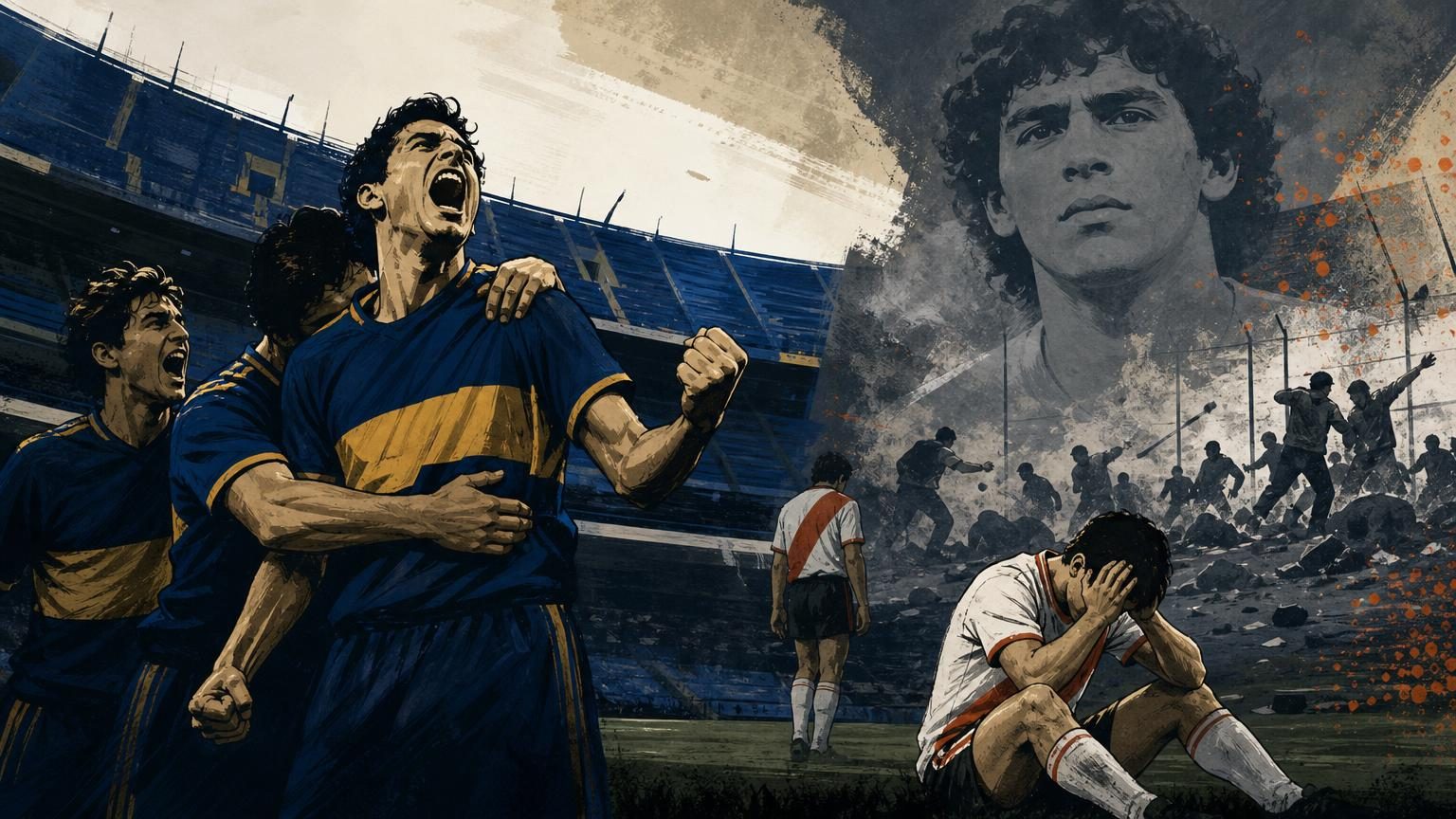
Boca Juniors beat River Plate 1-0 at La Bombonera on Sunday, with River reduced to nine men by full time, according to Guardian Sport's Marcela Mora y Araujo, who attended the match.
The result looked modest on paper. Yet under Argentina's current scoring method, known as the Argentina Table, the win means Boca have secured a place in next season's Copa Libertadores, South America's equivalent of the Champions League.
The radio commentator Victor Hugo Morales offered a blunt verdict afterwards: "I've seen better Superclásicos."
That understatement sits oddly with the fixture's reputation. The Observer Sport Monthly once ranked watching Boca play River in Buenos Aires as the single sporting experience to have before dying, back in 2004, and the derby's mythology of colour, noise and danger has travelled the world ever since.
The reality on the ground has changed substantially. Since 2013, Argentine football matches have been played without away supporters, a measure that has made the occasion more family-friendly and eased ticket access for club members, Mora y Araujo reports.
The journalist Ezequiel Fernández Moores recalled the first fan-free Superclásico at River's Monumental stadium in 2013, when Boca's Emmanuel Gigliotti scored the opening goal. Sat among away press with no away fans to cheer, he realised mid-breath that any outward joy from the visiting side had to be suppressed.
Boca marked Sunday's rain forecast by distributing blue and yellow umbrellas to supporters, which opened in unison and matched the colour of the smoke from the club's own fireworks display, Mora y Araujo writes. That pyrotechnic display and the choreographed balloon releases were once organised informally by La Doce, the Boca hardcore group that still leads the chanting from the stadium's middle tier.
The fixture's darker history runs much deeper than fireworks. Mora y Araujo recalled spending an afternoon in 1994 with José Barritta, then the leader of La Doce, for a colour piece on the derby. That day ended with two River Plate fans shot dead after the match, and graffiti later appeared nearby reading "River 2 Boca 2", equating the deaths with the scoreline of River's victory.
Her original feature was shelved. She instead became a witness confirming Barritta had not been involved in the killings, and her account was eventually published in a human rights journal rather than as planned.
Fatal violence at the Superclásico predates that incident. In 1968, 71 fans, most of them Boca supporters, were crushed to death when an exit gate for away fans failed to open fully, an episode known as the Puerta 12 disaster. Much of what happened that day remains unclear, though Guardian Sport notes that El Gráfico reported the following year's fixture saw Boca and River fans chanting together against police.
That solidarity reflected a different era. Boca's gang leader at the time, known as Quique, ran a grill opposite the stadium and bought meat from his River counterpart, a butcher nicknamed El Tano Mingo. The two groups sometimes combined forces against rival clubs' gangs into the mid-1970s, before new leaderships hardened the divide. Barritta took charge of La Doce in 1981, by which point the split between the two sets of supporters was total.
The most recent attempt to restore away fans to the fixture ended in chaos. Argentina's then-president, Mauricio Macri, allowed visiting supporters back for the 2018 Copa Libertadores final between the two clubs as a one-off experiment. The Boca team bus was attacked with stones outside River's stadium, crowd control broke down, and fans were held in place for close to five hours while officials deliberated. The match was ultimately cancelled and replayed in Madrid.
Sunday's fixture carried none of that weight. Mora y Araujo describes it as almost inconsequential for the league or cup in isolation, its only tangible outcome being Boca's qualification for next year's Libertadores via the points system now used to determine the derby's broader stakes.