 Sport Break News
Hurricanes boss Laidlaw: I'd talk to Scotland about Townsend's job
Super Rugby champion Clark Laidlaw, son of Roy Laidlaw, says he would consider the Scotland head coach role one day but insists his focus stays with the Hurricanes, as his former players prepare to face Scotland with the All Blacks at Murrayfield.
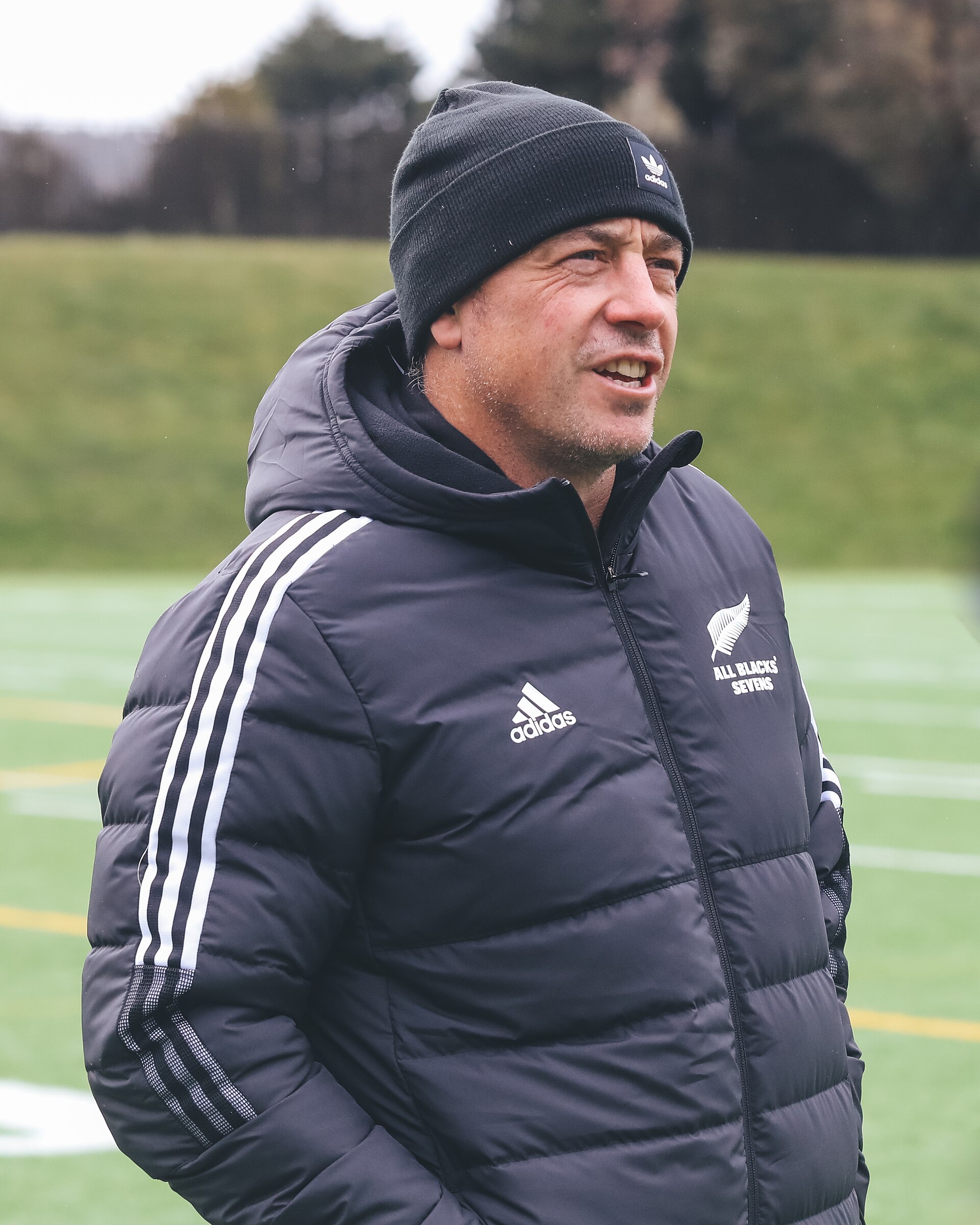
Clark Laidlaw, the Hurricanes head coach who led the club to a dominant Super Rugby title, has said he would "welcome a conversation" about one day succeeding Gregor Townsend as Scotland head coach, speaking to the BBC's Scotland Rugby Podcast.
Laidlaw's Hurricanes finished top of the Super Rugby table before a run of knockout wins that included a 66-12 victory over the Brumbies, a 57-21 semi-final win against the Blues and a 60-5 demolition of the Chiefs in the final. It was his third season in charge of the club.
Eight of his Hurricanes players are now in Dave Rennie's All Blacks squad for Saturday's meeting with Scotland at Murrayfield, where Laidlaw's countryman Mike Blair returns as New Zealand's attack coach. Fellow Scots Euan Mackintosh and Adam Hay also hold roles within the All Blacks set-up as skills acquisition coach and performance scientist respectively.
Laidlaw is the son of former Scotland and Lions scrum-half Roy Laidlaw, who won 47 caps and four Lions caps over an eight-year Test career, and is a cousin of Greig Laidlaw. He described a recent lunch with Blair, Mackintosh and Hay in New Zealand, saying "we were getting a bit of stick at lunch, the four of us talking Scottish."
Despite holding a New Zealand passport, Laidlaw said he wants Scotland to win on Saturday. "You're gonna see New Zealand's strongest possible team, but there's no reason why Scotland can't win," he said, adding that recent defeats had come down to fine margins: "It's been a bounce of the ball here and there." He went further, saying: "Scotland are definitely knocking on the door. I want Scotland to beat the All Blacks and I want the All Blacks to win every other game."
Laidlaw left Scotland at 30 to take a skills coaching role in Taranaki, beginning 18 years based in New Zealand on and off. He later turned down moves to Leinster and Montpellier, and had a brief spell at London Irish roughly a decade ago before returning to New Zealand.
He put his departure down to curiosity rather than dissatisfaction, saying he had a secure life coaching Jed-Forest and working for East Lothian Council. "I used to go and pass my rugby ball against a tree at lunchtime and train at night. I used to say to the old boys, I wasn't going to be staying here," he recalled, adding that colleagues doubted he would ever leave.
His time coaching New Zealand's Sevens programme brought Commonwealth Games gold, World Cup Sevens gold and an Olympic silver medal in Tokyo. He said that era shaped him as much personally as professionally, telling the podcast that working with young athletes far from home meant the staff had to build "a caring element to that programme as well as driving them forward," and that the experience had left him with "more empathy and more of an understanding side" than he had when younger.
On the Scotland vacancy, Laidlaw was careful to praise the current head coach before addressing his own ambitions. "Gregor's done an amazing job," he said, predicting that "lots of coaches around the world will be looking at that job with real excitement for whenever Gregor moves on."
He did not rule out taking the role himself, saying "I'd welcome a conversation," though he acknowledged that leaving New Zealand for Scotland would be a major upheaval and that sport can take unexpected turns. He stressed that the Hurricanes remain his priority: "One thing I have learned is you can't plan. My focus is on the Hurricanes. If that leads to international rugby somewhere one day then I would definitely look at it, but looking too far ahead can trip you up."
Laidlaw also spoke about his father's health, saying Roy is now living with dementia in a care home. Reflecting on his father's playing career, he noted the scale of the old Test workload compared with the modern game, remarking that his father's eight years in the Scotland jersey "would be 120 games nowadays, wouldn't it."
Photo credits
File photo (2022). Photo: Rachaelwhare · CC BY-SA 4.0 · via Wikimedia Commons · shown in full here; cropped in thumbnails
