 Sport Break News
David Miller, authoritative football and Olympics correspondent, dies aged 91
The former Times and Daily Express sports writer, who covered 25 Olympic Games and reported the 1985 Heysel disaster, has died, Guardian Sport reports.
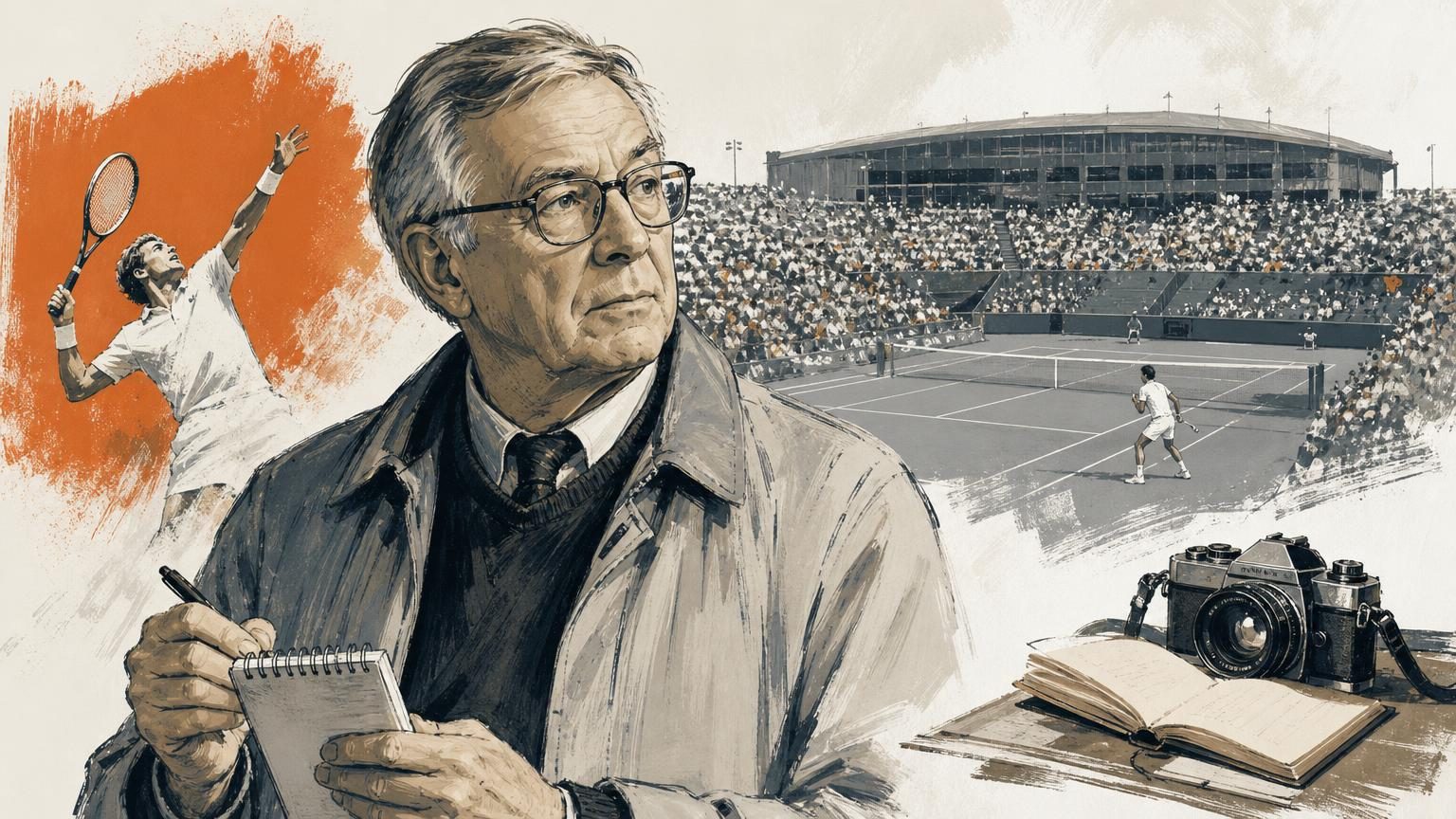
David Miller, the sports journalist regarded as one of the leading authorities on football and the Olympic Games, has died at the age of 91, according to Guardian Sport.
Miller joined the sports desk at the Times in 1956 as a young science graduate from Cambridge. Two years later he travelled to Sweden to cover the football World Cup on a shoestring, filing reports for his paper for six guineas a match.
By the time his career in regular sports journalism ended in 2012, he had covered 25 Summer and Winter Olympic Games, 14 football World Cups, 62 FA Cup finals, 450 England internationals and 53 Wimbledon championships.
He was an athlete as well as a writer: playing as a winger, he earned Cambridge football blues in 1954 and 1955, and he narrowly missed selection for the javelin at the 1956 Olympics.
The columnist Pat Collins said Miller "took football more seriously than anyone else". He was known as a workaholic who cultivated contacts ranging from Stanley Matthews to Sebastian Coe, and he wrote more than 30 sport-related books, the last published when he was 87.
When Liverpool met Juventus in the 1985 European Cup final at Heysel Stadium, a disaster in which 39 spectators died during rioting before kick-off, Miller's coverage spanned the front page, back page and sports pages, all filed in time for Times readers the next morning.
His parents were the actor Wilfred Miller and Everilda, nee Milne-Redhead; he attended Charterhouse school ahead of his studies at Peterhouse, Cambridge.
He did not stay long in his first job at the Times, moving to the Daily Express in 1973 as chief sports writer after a spell at the Telegraph, where in 1960 he recorded 227 bylines covering football and tennis.
After a decade at the Express he returned to the Times for a pay cut. His sports editor there, Tom Clarke, said Miller "understood how big-time sports people operated because he spent time with people like Coe", adding that although some found him pompous, "he wasn't pompous to work with."
Miller's determination to build close relationships with Olympic leadership created friction with the Guardian's own Olympic specialist, John Rodda, who was friendly with the International Olympic Committee's Lord Killanin. Miller instead cultivated Killanin's successor, Juan Antonio Samaranch, securing an unusually wide-ranging officials' pass at one Games that irritated other reporters.
His 1992 book Olympic Revolution was criticised by the Guardian at the time as "ludicrous" in its favourable treatment of Samaranch, a judgment that may have contributed to his departure from the Times in 2007.
Miller retired to Norfolk, where he continued writing as a freelance. Colleagues recalled him as a man of contradictions, capable of being both infuriating and, particularly towards waiters, extremely generous.
He took family holidays with the Guardian's Frank Keating, who once described a sailing trip with Miller in the Solent, saying: "I swear we didn't so much go past the Needles as through them."
Marita Malyon became his wife in 1957 and died in 2018; their daughter Michelle died in 2024. Their son, Gavin, survives him.