 Sport Break News
Cantona breaks cover: 'I am a flower of evil, and I find it very beautiful'
Ahead of a new documentary, Éric Cantona speaks to Guardian Football about his history, his infamous kung fu kick and why he refuses to discuss Manchester United's present.
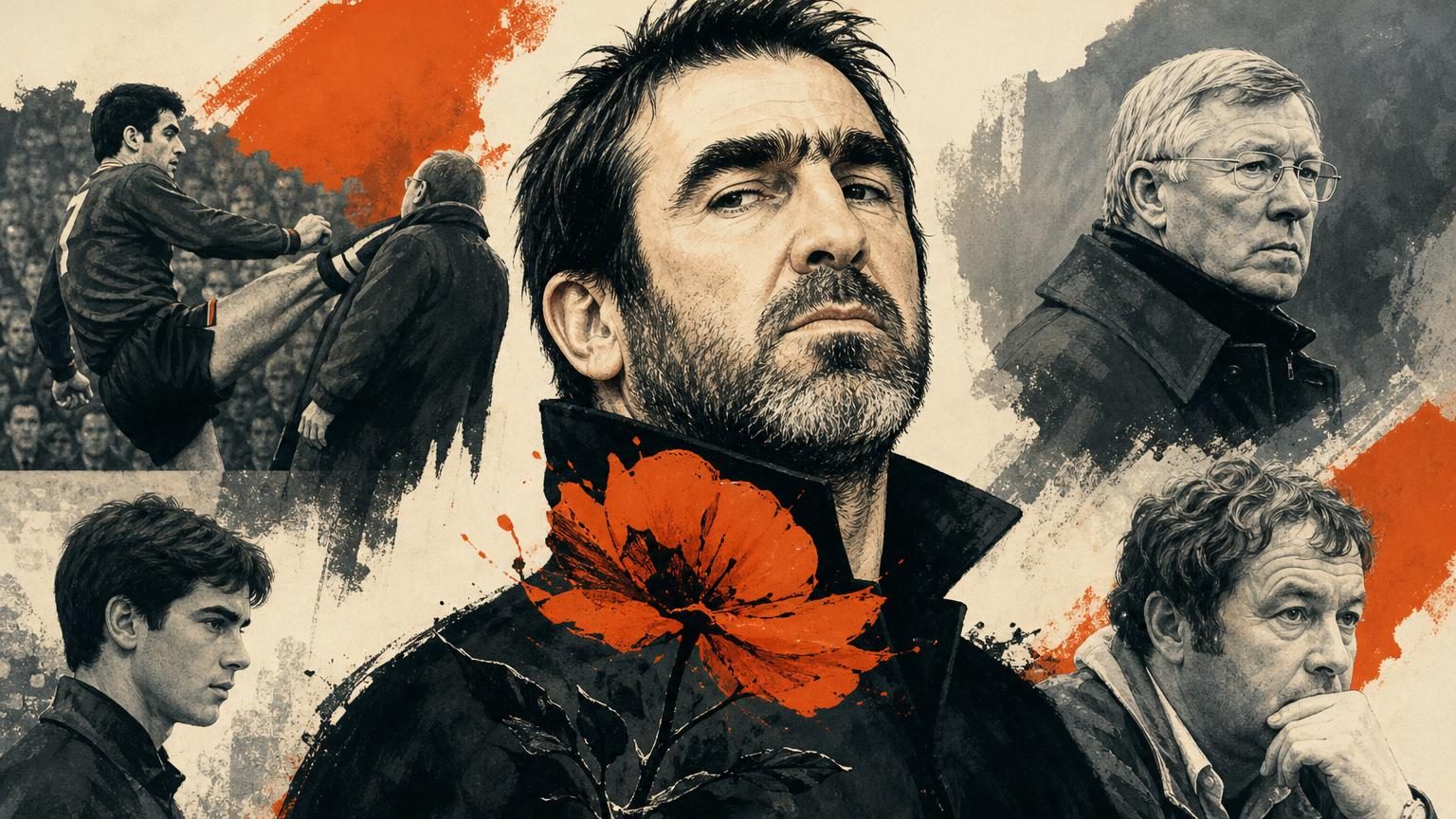
Éric Cantona has given a rare interview tied to the release of a new documentary, Cantona: Flower of Evil, telling Guardian Football's Donald McRae that he sees himself as a contradiction of character rather than a settled figure of either virtue or villainy.
"I'm an angel and a demon," Cantona says in the film, according to the Guardian. "And an angel or a demon, you love him or you hate him... Maybe I'm a good person, but I can also be a flower of evil. It's the first time in my life I've realised this. I am a flower of evil, and I find it very beautiful."
The documentary opens with archive footage of a combative television exchange between Cantona and French journalists after L'Équipe described his 1995 kung fu kick on a Crystal Palace supporter as "unforgivable". In that footage, Cantona turns the word back on the Catholic church before telling two reporters: "I piss on the pope's arse. Just as I piss on the arse of certain journalists… including you and you."
Interviewed now in his home city of Marseille, Cantona strikes a far warmer tone about his relationship with the press. "I'm a good client for the journalists – and they are a good client for me to express myself," he tells McRae. "We play a bit like the cat and the mouse. Sometimes we have good relationships, sometimes a bad relationship. But it's always interesting and exciting."
The film takes its title from Charles Baudelaire's 19th-century poetry collection Flowers of Evil, which Cantona quotes at the outset.
Cantona recounts to Guardian Football how close he came to vanishing from the sport altogether after falling out with the France manager Henri Michel, having once declared him "one of the most incompetent coaches in world football". It was Michel Platini, Michel's successor, who persuaded Cantona to abandon a brief retirement and try his luck in England in 1992. "I knew it will be my last chance," Cantona says, "and it's really in England where I regain this passion for football… it's a rebirth."
Before Leeds United, there was an episode the documentary leaves out entirely: a trial at Sheffield Wednesday under Trevor Francis. Cantona tells McRae he scored a hat-trick in a 4-3 friendly win, only to be told he needed another week on trial before any contract was offered. "I said: 'No. I leave,'" he recalls.
Howard Wilkinson moved for him instead, taking Cantona to Leeds, where the club won the league title in 1992 for the first time in 18 years. Cantona describes a side built around Gary Speed, David Batty, Gary McAllister and Gordon Strachan, calling the football "old-fashioned" but adding: "there was also, for me, the feeling of adding something different."
He moved to Manchester United that same year for a fee of around £1m, and went on to help the club end its own 26-year wait for the title in 1993. Cantona tells Guardian Football that United's identity has always embraced strong characters, naming George Best, Brian McClair, Norman Whiteside and Roy Keane among those the club "loved" for their individuality.
He also rejects the idea that a move to Italy or Spain could have offered more: "I love Italian football. I love Spanish football. I love Barcelona. But nothing can compare to English football and the fans, the way they sing and express themselves. It's so powerful."
According to the Guardian, Cantona's brother Joel had warned in advance that the striker would end the interview immediately if asked about Manchester United's current turmoil, including Mauricio Pochettino's arrival or the Glazer family's ownership. McRae reports that no such confrontation was needed, with Cantona instead electing to speak at length about the club's past rather than its present.