 Sport Break News
Pay-to-watch hockey: how Canada's NHL broadcast splintering is fraying a national ritual
New polling shows most Canadians resent having to pay extra to watch their own NHL teams, as streaming deals and the end of Hockey Night in Canada's CBC run reshape how the sport is consumed.
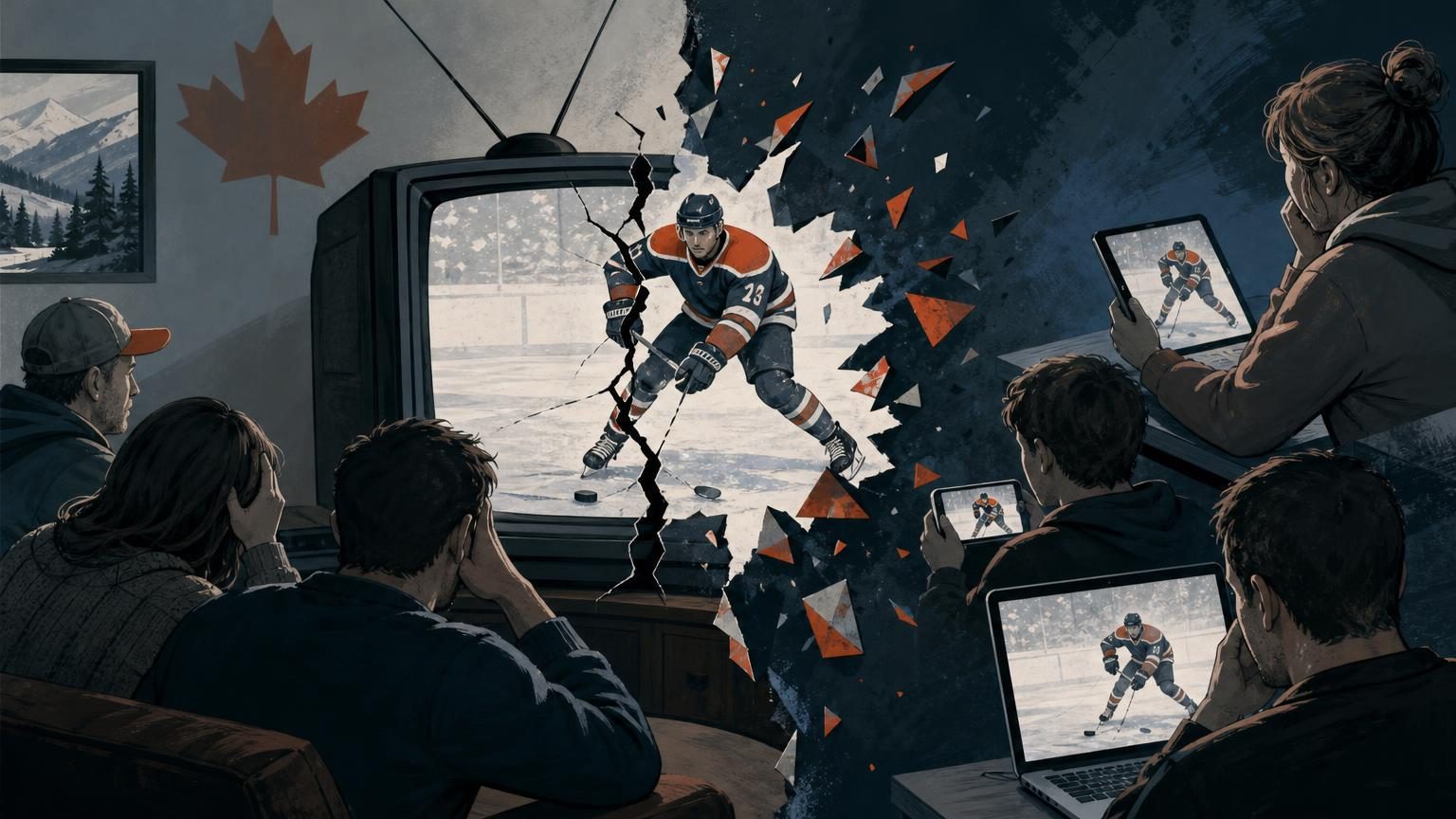
Edmonton Oilers captain Connor McDavid reached 31 assists in just 16 games this season, the fastest any player has hit that mark in NHL history, according to figures reported by Guardian Sport.
Yet when the Oilers lost to the Detroit Red Wings on 26 October, many fans in Edmonton, including those in local bars, could not watch McDavid add to his tally because the match was one of nine Oilers fixtures this season locked behind a Sportsnet+ subscription, Guardian Sport reported.
Sportsnet+ is a streaming service owned by Rogers Communications, the telecom company that also owns the Toronto Maple Leafs, and costs $12.99 a month.
Two nights later, when the Oilers played their provincial rivals the Calgary Flames, the game was available only to Amazon Prime subscribers, part of the NHL's expanded broadcast arrangement with Amazon. McDavid recorded two assists in that match too.
The fragmentation extends beyond streaming add-ons. In June, the Canadian Broadcasting Corporation announced it would stop airing Saturday night games under the Hockey Night in Canada banner, ending a run that stretched back to 1952, Guardian Sport reported.
Rogers had signed a $5.2bn deal with the NHL in 2013 for Canadian broadcast rights, sublicensing Saturday games to the CBC. When the two parties failed to reach a new agreement, Rogers proceeded alone with a 12-year, $11bn rights renewal that began in October.
Sportsnet described the split in a statement reported by Guardian Sport as preserving a "time-honoured tradition for Canadians", saying the network was "privileged to continue delivering that tradition."
Polling from Angus Reid, cited by Guardian Sport, suggests Canadians are unconvinced. Some 78% of respondents said it was bad that more games now require additional subscriptions, while 63% said they pay too much for Sportsnet+ and 33% said the same of Amazon Prime.
An even larger share, 79%, said it had become too expensive overall to follow their favourite NHL team, and 74% said the end of Hockey Night in Canada on CBC was a major loss for the sport's traditions in the country.
Despite the frustration over cost and access, 90% of those surveyed said hockey remained an important or defining part of Canadian identity, close to the 88% who said the same a decade ago.
Guardian Sport's Colin Horgan placed the current shift against the sport's broadcasting history, noting that Foster Hewitt's radio commentary carried Maple Leafs games across the country from the late 1930s, and that children paused their school day in 1972 to watch Paul Henderson score against the Soviets in the Summit Series.
The piece also recalled Graham Spry, founder of the Canadian Radio League, who argued for public broadcasting in 1932 by framing the choice as "the State or the United States." Hewitt's broadcasts went coast to coast on the CBC not long afterwards.
The same Angus Reid survey found that younger Canadians were more likely to say that highlights and clips on social media were sufficient to keep up with sport, a trend Guardian Sport linked to a broader move towards asynchronous, individually curated media consumption rather than shared, scheduled viewing.
Horgan's analysis argued that hockey's collective television habit, not just the sport itself, had done real work in holding Canadians together, and that the splintering of broadcast rights across Sportsnet+, Amazon Prime and a diminished CBC presence removes one of the few remaining shared national rituals, even as the sport's symbolic importance to Canadians has not measurably declined.