 Sport Break News
How a Rio afternoon of guitars and gifts gave way to Pelé and Maradona's bitter feud
A new book traces the 1979 meeting that briefly united Pelé and Diego Maradona before a column written during the 1982 World Cup set them on a collision course, Guardian Football reports.
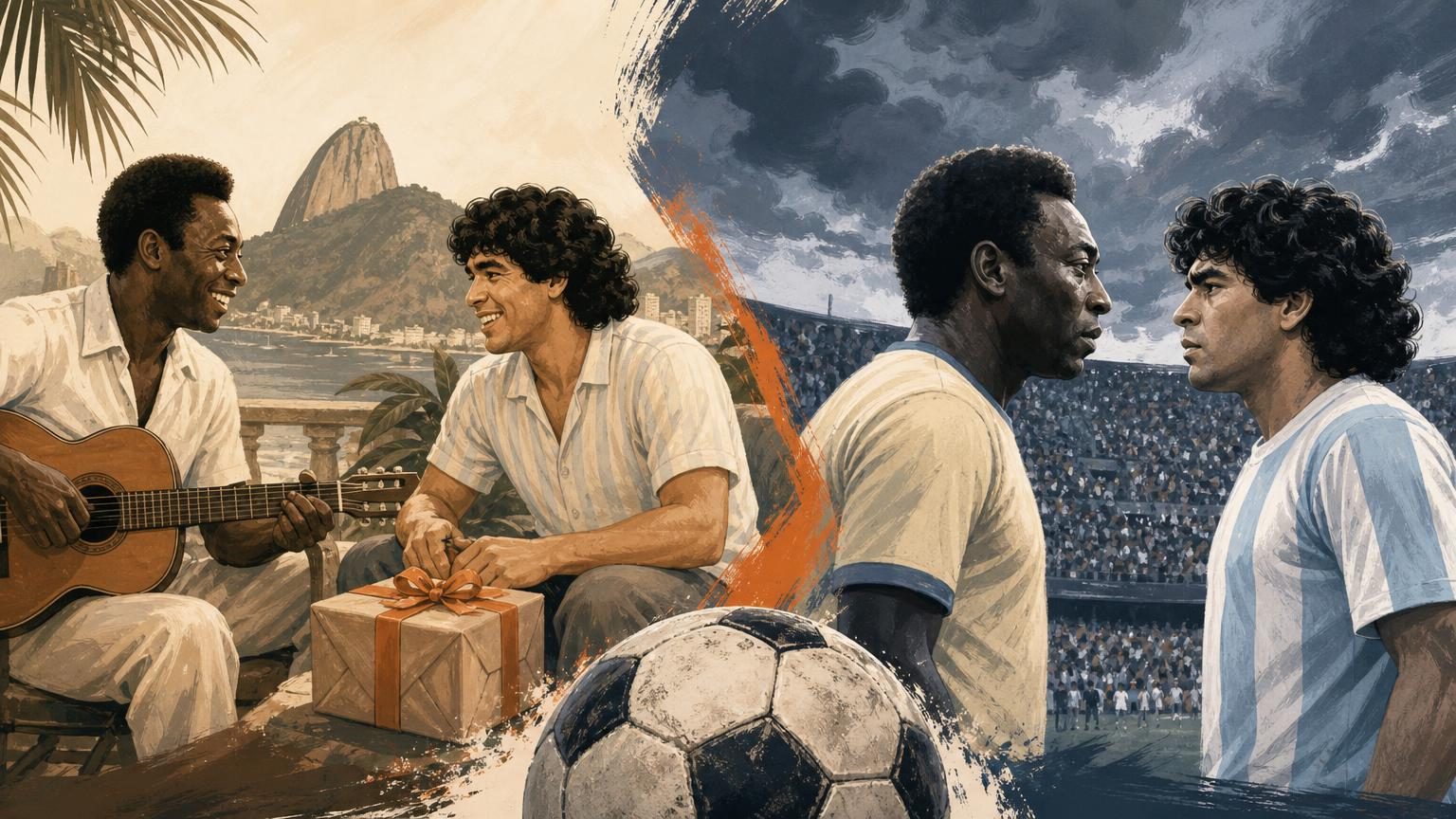
Pelé and Diego Maradona first met in April 1979, a few weeks after the young Argentinian had led his country's under-20 side to the World Youth Cup finals, according to reporting by Guardian Football.
The meeting almost did not happen. Maradona had told a journalist friend he dreamed of meeting Pelé, but arrangements kept collapsing because he refused to travel on Mondays, the day he reserved for his girlfriend, Claudia.
It was Guillermo Blanco, a reporter for the Argentinian magazine El Gráfico who had already secured Pelé's approval for the piece, who forced the issue. He intercepted Maradona after a match between Argentine Juniors and Huracán, booked him onto a Sunday night flight without telling him in advance, and sent him to Rio with his father, his agent and a photographer.
The group gathered the next day at the Copacabana apartment of Alfredo Saad, where Maradona and Pelé talked football and life for an hour. Blanco recalled that Pelé picked up a guitar and sang, before the conversation turned serious.
"Then there was a moment when it got a bit deep when Pelé started to give Diego some advice," Blanco said, according to Guardian Football. "He took Diego's hand and he started giving him counsel. 'Look after your body. Remember to always train. There's a lot of responsibility on your shoulders.' It was like a premonition."
Pelé embraced Maradona's father before the Argentinians left and presented Diego with a signed ball, a Brazil shirt and a watch bearing his own name.
Maradona later said, "I knew Pelé was a God as a player," adding, "Now that I've met him, I know he is as a person, too."
The goodwill lasted only three years. Writing a syndicated column during the 1982 World Cup, Pelé predicted before a ball was kicked that Brazil's Zico would outshine Maradona, and he went further by questioning the Argentinian's temperament.
"My biggest doubt," Pelé wrote, as reported by Guardian Football, "lies in knowing if Diego has sufficient greatness in his person to justify the honours that the world audience pays him."
Events in that tournament appeared to prove him right. Maradona was sent off in Argentina's second-round defeat to Brazil after stamping on João Batista late in a 3-1 loss that eliminated the reigning champions.
Pelé used his column the following day to press the point, describing Maradona as "an immature young man, who almost hasn't had the time to transform himself into the great player that many people blindly state that he is."
Maradona regarded the remarks as a betrayal from a man he had considered a friend, and the slight is said to have wounded him deeply, though it took years before he responded publicly.
He was still only 21 at the time, and according to Guardian Football's account he remained relatively guarded about expressing his opinions in public, uncertain of how far his talent would ultimately take him.
That changed once he captained Argentina to the 1986 World Cup. Anointed by much of the football world as Pelé's natural successor, Maradona began answering his critics directly, and Pelé in turn felt compelled to defend his own standing.
Guardian Football notes that Maradona later summed up the dynamic between them succinctly: "We're oil and water." What had begun as a relationship built on shared admiration hardened into a rivalry shaped as much by South American nationalism and competing egos as by anything that happened on the pitch.