 Sport Break News
Racing Post Pulls Greyhound Racecards as Industry Faces Fresh Crisis
The trade paper will drop greyhound editorial and racecards from its print edition next month, deepening a sport already under pressure from closures, bans and a well-funded abolition campaign.
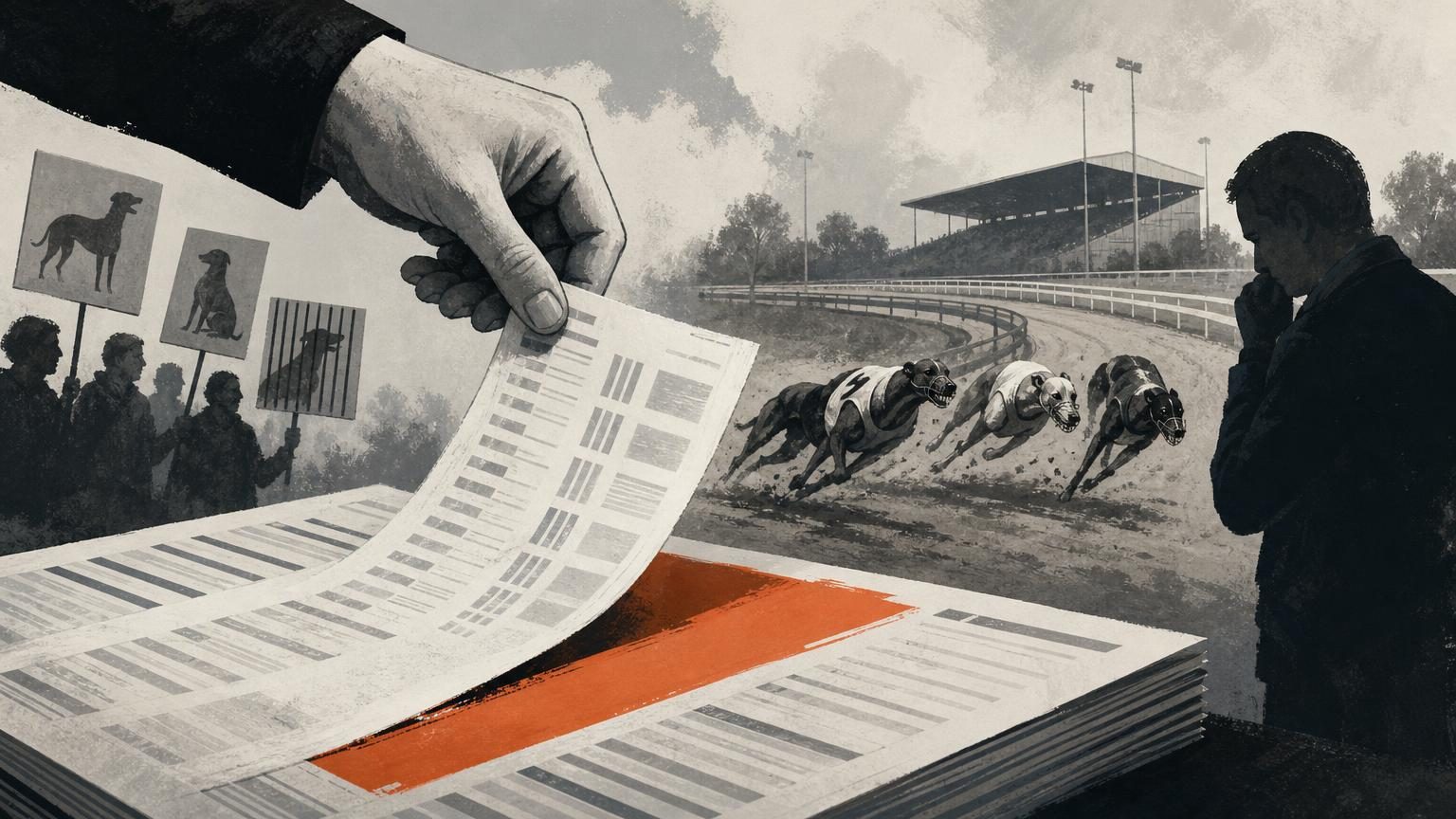
The Racing Post is to stop printing greyhound racing editorial and racecards from 10 December, ending coverage that has run since the paper launched in 1986, Guardian Sport reports.
Editor Tom Kerr told readers in a letter that it had been an "immensely difficult decision", pointing to "tax rises that have hit betting shops [which] have put pressure on the whole industry".
Kerr added that the paper, like others, had to "make hard choices about where we focus our resources". Five staff are expected to lose their jobs as a result, according to the Guardian.
A greyhound section will remain on the Racing Post website, but the print decision landed badly with fans and professionals within the sport.
Mark Bird, chief executive of the Greyhound Board of Great Britain, said it "will have come as a shock to those who have followed the sport for decades and relied on the paper as a trusted source of news, results and insight".
Bird called it "deeply disappointing news, particularly at a time when it feels more important than ever for horse racing and greyhound racing to stand together in the face of the challenges confronting both sports".
He said the GBGB was "already exploring what opportunities may exist with other national publications to increase the visibility of the sport", adding that he hoped the talks would "prove productive" and that stakeholders would be updated "as and when there is meaningful news to share".
The paper's withdrawal lands on a sport that has little room left to absorb bad news. England and Wales currently have 15 active greyhound tracks, but Valley Greyhounds near Caerphilly, the only track in Wales, is due to close by April 2030 after the Senedd voted to ban the sport this year.
Scotland, which has had no GBGB-licensed track since March 2020, also voted this year to outlaw greyhound racing outright.
The scale of the sport's decline is stark. In 2004 there were 12,000 new greyhound registrations and 51 tracks, including 20 independent venues, generating around £3bn in annual betting turnover, according to figures cited by the Guardian. Both Walthamstow and Wimbledon, former home of the Greyhound Derby, have since closed.
The Gambling Commission put off-course turnover at roughly £1.2bn in 2025, with about half of that coming through betting shops. Unlike horse racing, which benefits from a statutory levy and substantial media rights income, greyhound racing has relied only on a voluntary levy from gambling firms, one that has shrunk steadily.
Since September 2023 the sport has also faced a coordinated campaign for its phased abolition, run by a coalition called Cut The Chase that includes Blue Cross and, most prominently, the RSPCA.
The RSPCA's backing marked a shift from its earlier approach of working alongside the industry on welfare issues such as racing injuries and the fate of retired dogs. At the coalition's launch it signed a joint statement describing greyhound racing as "inherently dangerous" and stating that "significant welfare issues for racing greyhounds have not been resolved and cannot be resolved."
The RSPCA's current stance on horse racing remains one of engagement rather than confrontation, though its tone has sharpened at times. After four horses died from 475 runners at this year's Cheltenham festival, the charity said the deaths were "clearly at odds with the UK's status as a nation of animal lovers".
British racing unveiled its latest five-year welfare plan at the House of Commons this month, covering safety, quality of life and lifetime responsibility for racehorses, as the industry seeks to keep the RSPCA engaged rather than opposed.