 Sport Break News
Las Vegas GP turns disruption into a billion-dollar jackpot for F1
George Russell rates the Las Vegas GP the biggest show on the F1 calendar after Monaco, and the economic figures reported by Guardian Sport suggest he has a point.
Formula One's Las Vegas race has gone from a troubled, legally contested launch in 2023 to a race organisers now point to as proof of the sport's commercial muscle, Guardian Sport reports.
This weekend's event is the fourth running of the race and comes with a deal in place to keep it on the calendar until 2037.
Mercedes' George Russell described it as close to F1's answer to American sport's biggest occasion. "With where the sport is now, I think you need a race like this on the schedule," he said. "I guess it's the biggest one, bar Monaco, from an entertainment perspective for the people who come here and for F1. This just feels like the Super Bowl."
The race was built at a cost of around £500m, and its first edition was marred by a loose water valve cover that curtailed running, alongside local opposition to the disruption caused to businesses and, in some cases, legal challenges from residents.
Emily Prazer, F1's chief commercial officer and president of the Las Vegas GP, acknowledged the early missteps. "We have to admit where we perhaps were a little bit bull in a china shop about it," she said. "We had a very small amount of time to get this thing up and running for 2023 but now we spend hours talking to people making sure we're answering those questions."
That process has included closer work with Clark County's administration and the Las Vegas Convention and Visitors Authority, which has helped ease local disquiet as the financial returns have become clear.
The race has generated $3.2bn (£2.4bn) in economic impact for southern Nevada over its first three years, with $45m and $43m in tax income in the two most recent years respectively. Research from 2024 found the average visitor spent $2,400 on the weekend, excluding race tickets, turning what had been the quietest weekend of the year in Vegas into a lucrative one.
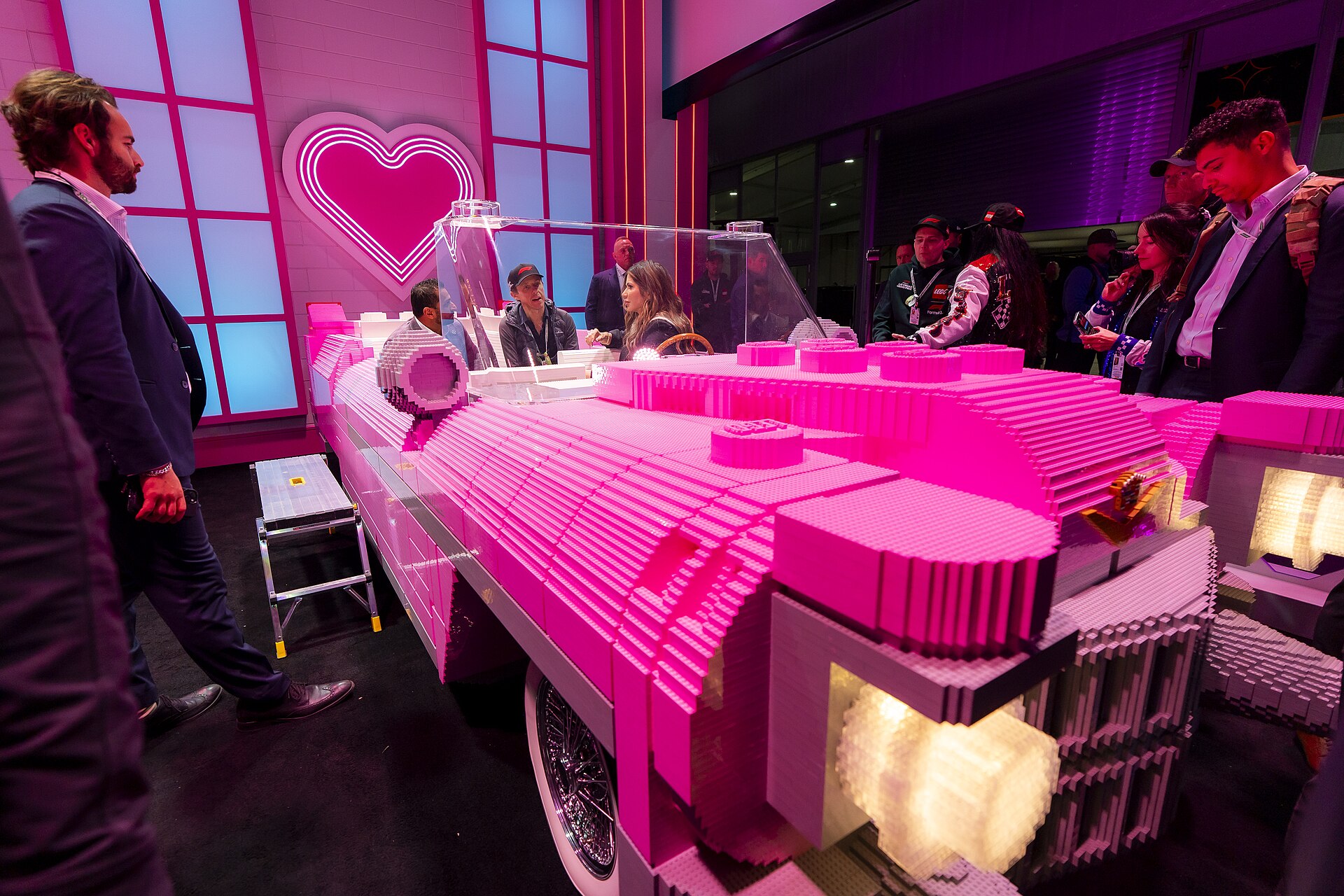
The race has also become a hub for F1's wider commercial expansion. New partnerships with the wearable fitness brand Whoop, which will see some drivers' heart rates broadcast live to fans and media, and with Nike were announced during the Las Vegas weekend, alongside a Lego tie-up featuring 4ft minifigure versions of each driver in the paddock and a celebrity Lego car race ahead of Saturday's main event.
On track, this year's race carries less sporting jeopardy than usual after Kimi Antonelli secured the drivers' title with Mercedes in Mexico, but the atmosphere in the fan zones has remained high even through rain-affected practice sessions.
One fan, named only as Gemma, 24, travelled from New York state with two friends for her first F1 race weekend. "We love the cars," she said. "Love the drivers. It's fun, exciting, there's so much action."
The weekend also carried significance beyond the entertainment programme. F1 and the FIA formally confirmed in Las Vegas that the sport will move to 2.1-litre V8 engines from 2030, featuring a smaller electric element with half of it restricted to an overtake-mode function, as the governing bodies look to address driver dissatisfaction with the current engine regulations and push for what organisers are calling more attack-orientated racing.
Photo credits
File photo (2025). Photo: DHSgov · Public domain · via Wikimedia Commons
