 Sport Break News
Buses, bombs and belief: how Syria's women rebuilt football amid 14 years of war
Guardian Football traces the fractured history of women's football in Syria, from a midnight evacuation during Assad's fall to the grassroots rebuild now producing regional titles.
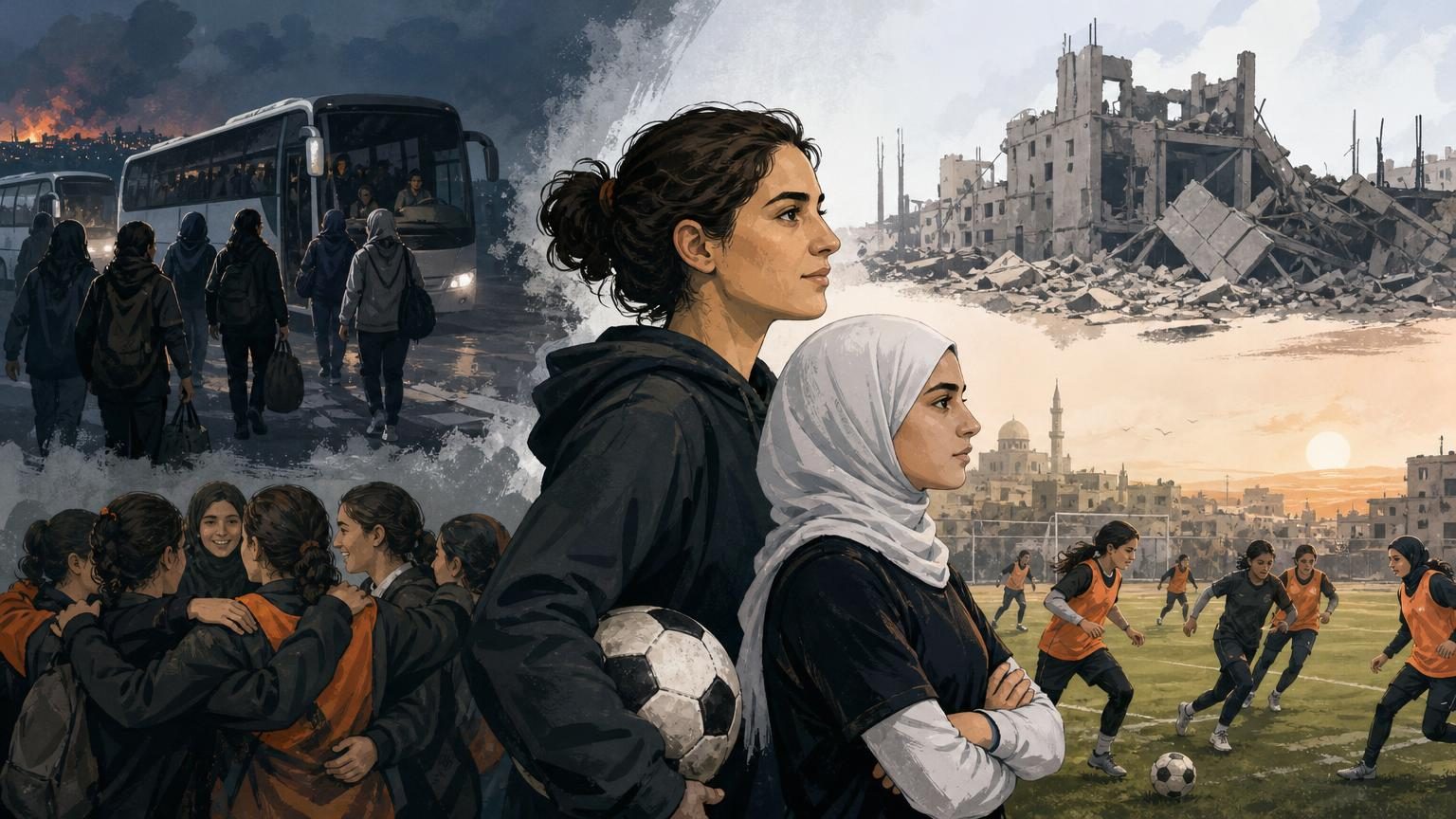
Syria's under-18 women's football team were forced onto a midnight bus from Aqaba to Damascus in December 2024, pulled out of the WAFF women's championship in Jordan as the country's war suddenly accelerated, according to Guardian Football.
The squad needed only a win over Saudi Arabia to keep their title hopes alive. Instead they withdrew amid fears the border would shut, as fighting that had been largely frozen for four years began moving fast, with rebel forces seizing Aleppo and advancing on Damascus, 350km away, and threatening to topple Bashar al-Assad.
Players from around the capital made it home quickly, but those from Hasakah in the north-east were stranded for three days at Damascus airport as staff abandoned their posts and aircraft sat idle, before a bus finally carried them back.
"My generation was burned away and completely lost," said Noor Jumaa, a former national team goalkeeper. She added separately: "It was like everything that was being built just disappeared."
After 14 years of conflict, Syria is still rebuilding much of its sporting infrastructure, and women's football has had to recover from a war that wiped out an entire generation of players. Yet the country's youth teams have become an unlikely success story in recent years, winning regional titles and producing players now making an impact abroad.
Syria's women played their first international fixture in 2005, and by 2011 the federation was drawing up plans for an 11-a-side league. The uprising that year halted everything. For six years there were no women's international matches at any level, only occasional futsal tournaments.
More than six million people fled Syria during the war, including hundreds connected to the sport, scattering an already small pool of players across the world.
Men's football continued throughout, with the national team playing abroad after Syria was barred from hosting matches on security grounds in 2011. The Assad regime leaned on the men's team's success to project normality, even hosting the squad at his palace after their 2012 WAFF Championship win, while Fifa stayed silent despite its own rules against political interference.
With no women's team to follow, Raneem Abo Lateef, now a 21-year-old goalkeeper for Syria, recalled watching the men play and wishing there was an equivalent for girls: "I was watching a match of Syria's men's national team, and I was really upset. I would say, 'God, if only they'd make a national team for girls'."
Her chance came after her family moved house and a neighbour mentioned a relative was starting a girls' club. "Girls' football? Wow," she said. She added: "It was like dreams coming true."
International teammate Julnar Mustafa, born in 2008 and too young to remember the uprising's start, grew up playing with boys in Hasakah and filmed herself performing tricks, posting the clips on Facebook until a regional coach spotted her and invited her to join his team.
Mustafa told Guardian Football that finding the opportunity was only half the battle. "In our society, especially in the north, in Hasakah, sport is completely off-limits for girls," she said. She added: "Not football, not anything."
The senior national team's own return to international competition came in April 2017, when Syria entered Asian Cup qualifiers in Vietnam after assembling a squad through a Facebook tryout announcement and barely a month of preparation. They lost every match, including a 14-0 defeat by Myanmar.
"Honestly, it was one of the worst teams in Syria's history," said Jumaa, who played in that squad. She added: "We lost by terrifying scores."
Maha Al-Katreb, also in the squad at the time, remembers the criticism players faced despite the lack of preparation, and recalled opponents arriving with far larger coaching staffs and younger players training alongside their senior sides.
An injury ended Al-Katreb's playing career early, and she moved into coaching before joining the Syrian Football Association in administrative and coaching roles. A six-team women's senior league followed in 2019, alongside the development of youth national teams, and this year the country held its first-ever women's youth league.
Al-Katreb has since drawn up Syria's first women's football strategy, submitted to Fifa, setting out a longer-term plan to expand participation and build a clearer pathway into the national team.